
Table of Contents
- 1. Align Communication Channels to DISC Styles
- 2. Create Structured Communication Strategies for Hybrid Meetings
- 3. Use Hybrid Team Communication Templates to Ensure Clarity
- 4. Select the Right Tools for Hybrid Team Collaboration
- 5. Build Inclusive Communication Strategies That Honor All DISC Types
- Making Communication Strategies Stick Across Your Hybrid Team
- Conclusion
Last Updated: August 4, 2026
1. Align Communication Channels to DISC Styles
Hybrid teams succeed when communication channels match how people actually prefer to interact. The challenge isn’t finding the right tool, it’s recognizing that your team members have fundamentally different communication styles, and forcing everyone into a single channel creates friction that undermines collaboration.
This is where DISC behavioral styles become essential. Dominance-oriented team members tend to prefer direct, asynchronous channels where they can make quick decisions without lengthy back-and-forth. Influence-driven colleagues thrive in interactive, real-time environments where they can build rapport and energize the group. Steadiness-focused team members appreciate structured, predictable communication patterns that reduce ambiguity. Conscientiousness-oriented individuals want detailed information, clear documentation, and time to process before responding.
Your first step is mapping your team’s DISC profiles to communication preferences. A hybrid environment gives you flexibility that in-office teams don’t have: you can support multiple channels simultaneously without creating chaos. Use email and documentation platforms for your detail-oriented, Conscientiousness-driven members. Dedicate real-time channels like video calls for your Influence-dominant colleagues who energize through connection. Establish clear, written protocols for your Steadiness-focused team members who need predictability. And create fast-track decision channels for your Dominance-oriented staff who want to move quickly.
The practical benefit: when people communicate through their preferred style, response times improve, engagement increases, and misunderstandings drop significantly. Your Conscientiousness team members stop feeling rushed when you give them written summaries before meetings. Your Dominance-oriented leaders stop feeling frustrated when you don’t require them to sit through lengthy consensus-building discussions.
Create a simple DISC communication guide for your team that documents each style’s preferred channels, response time expectations, and meeting formats. Share it during onboarding so new hires understand why communication looks different across your organization.
2. Create Structured Communication Strategies for Hybrid Meetings
Hybrid meetings are where communication strategies either succeed or fall apart. When some people are in a conference room and others are remote, the default approach, treating the room as the priority, guarantees that your remote participants will disengage.
Structured meeting protocols work because they remove guesswork about participation. Start by assigning a meeting facilitator whose only job is managing the hybrid experience: monitoring chat, ensuring remote participants are heard, and keeping the conversation on track. This role is especially important for meetings with mixed DISC styles.
For Dominance-oriented participants, structure means clear agendas with time limits. They want to know the decision point upfront and move toward it efficiently. For Influence-driven team members, structure means designated time for relationship-building and interactive discussion. For Steadiness-focused participants, structure means predictable meeting formats and advance notice of topics. For Conscientiousness-oriented attendees, structure means detailed pre-meeting materials and clear documentation of decisions.
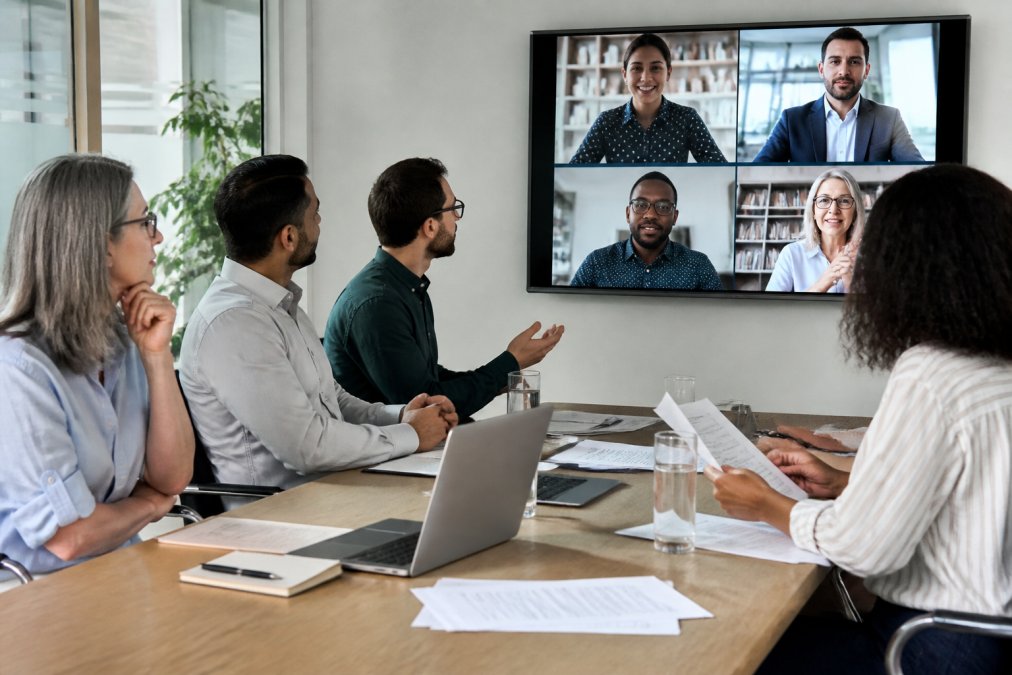
Implement these specific tactics: require all participants, even those in the conference room, to join the video call from their individual desks or devices. This eliminates the "side conversations in the room" problem that excludes remote workers. Use breakout rooms for smaller discussions, which work equally well for in-office and remote participants. Assign someone to take notes in a shared document that everyone can see in real time, so Conscientiousness-oriented team members can follow along and reference details later.
The timing matters too. Schedule hybrid meetings during core hours when your full team is available, and keep them to 45 minutes maximum. Research from organizations using structured hybrid meeting protocols shows that shorter, more frequent check-ins maintain momentum better than long, infrequent meetings where engagement drops after 30 minutes.
The single most important rule for hybrid meetings: every participant should feel equally present. If your remote workers are watching a camera pointed at the conference table, they’re not equally present, they’re observers.
3. Use Hybrid Team Communication Templates to Ensure Clarity
Templates eliminate the ambiguity that causes miscommunication in hybrid environments. When communication happens asynchronously across time zones and channels, a simple template ensures everyone provides the same information in the same format, making it easier for others to find what they need.
Create templates for your most frequent communication types: project status updates, decision announcements, meeting recaps, and escalation requests. Each template should follow the same structure and include fields that matter to your DISC-diverse team.
A project status update template might look like this:
Project Status Update Template:
- Project name and owner
- Current phase and percentage complete
- Key accomplishments since last update
- Upcoming milestones and dates
- Blockers or risks (with severity level)
- Resources needed
- Next check-in date
This structure works because it serves all DISC styles. Your Conscientiousness team members get the detailed breakdown they need. Your Dominance-oriented leaders see the risk assessment and decision points immediately. Your Steadiness-focused colleagues appreciate the predictable format and clear timeline. Your Influence-driven team members can see the overall narrative and celebrate accomplishments.
For decision announcements, include: the decision being made, the rationale, who made it, when it takes effect, and how people should respond. This format prevents the common hybrid problem where some team members hear about a decision through the grapevine while others are still waiting for official communication.
Meeting recap templates should capture: who attended, decisions made, action items with owners and due dates, and next meeting date. Distribute recaps within 24 hours while the meeting is fresh. This is especially important for team members who couldn’t attend, they stay informed without needing to chase down details.
The biggest mistake with templates is over-engineering them. If a template takes more than 5 minutes to complete, people will skip it or fill it out carelessly. Keep templates simple enough that busy team members actually use them.
4. Select the Right Tools for Hybrid Team Collaboration
The tools you choose shape how your team communicates. The wrong tools create friction; the right ones become invisible infrastructure that supports how your team naturally works.
Your tool stack should include four categories: synchronous communication (video calls), asynchronous messaging (chat and email), project management (task tracking), and document collaboration (shared files). You don’t need 10 different tools, you need 4-5 that integrate well and cover these categories.
For synchronous communication, platforms like Zoom provide the video conferencing foundation that hybrid teams need. Zoom works because it handles both scheduled meetings and spontaneous calls, supports breakout rooms for smaller discussions, and integrates with most project management platforms. The free tier supports group calls up to 40 minutes, which works for quick team syncs.
For asynchronous messaging, Slack serves as the central nervous system for many hybrid teams. Its strength is organizing conversations by channel (project-based, team-based, or topic-based), which helps team members find relevant discussions without wading through everything. Slack’s threaded conversations keep discussions organized, and the searchable history means you can reference past decisions months later. Microsoft Teams offers similar functionality for organizations already invested in the Microsoft ecosystem, with the advantage of tight integration with Office 365 apps.
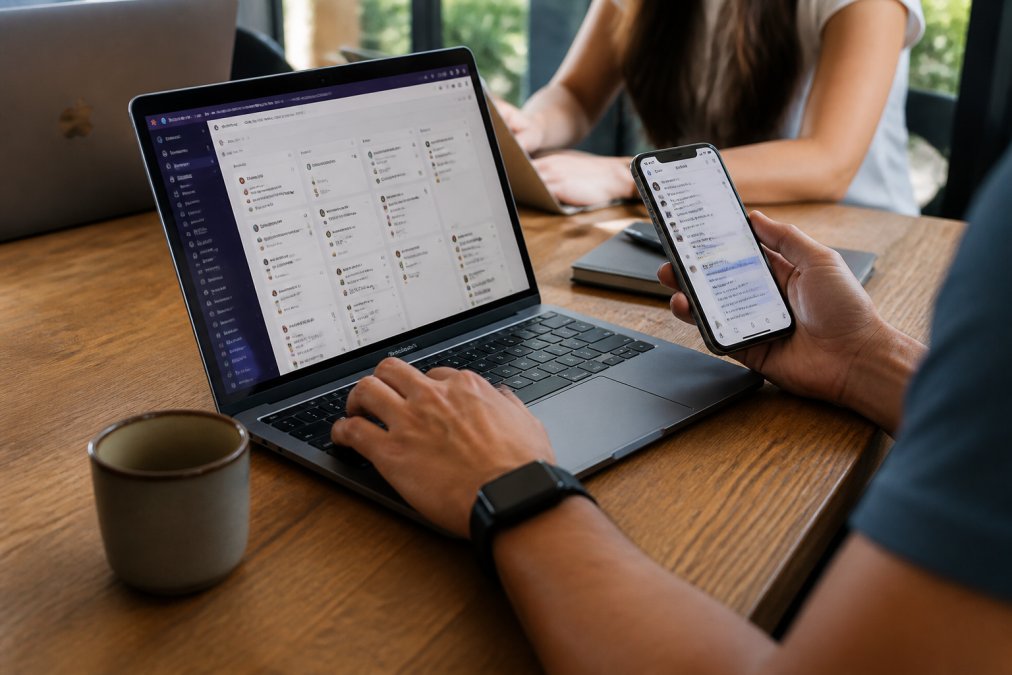
For project management and task tracking, platforms like Asana, monday.com, and ClickUp provide the structure that keeps hybrid teams aligned. These tools let you assign tasks, set deadlines, track progress, and maintain visibility into who’s doing what, critical when team members aren’t in the same physical space. Asana excels at timeline visualization and dependency mapping. Monday.com offers highly customizable workflows. ClickUp provides an all-in-one platform that consolidates tasks, docs, and communication in one place.
For collaborative documents, Google Workspace and Microsoft 365 are the standards. Both allow real-time co-editing, comment threads, and version history. The choice between them usually comes down to whether your team is already invested in Google or Microsoft ecosystems.
The integration question matters more than individual tool quality. Your messaging platform should connect to your project management tool so you can create tasks from chat messages. Your video conferencing platform should integrate with your calendar and project management system. These connections reduce the friction of switching between tools.
Take The Official DiSC® Assessment Online Now! →
Consider your team’s DISC diversity when evaluating tools. Dominance-oriented leaders want dashboards that show high-level progress at a glance. Conscientiousness-focused team members need detailed reporting and audit trails. Steadiness-driven colleagues appreciate predictable, stable platforms that don’t change constantly. Influence-oriented members want tools that make collaboration and communication feel natural.
5. Build Inclusive Communication Strategies That Honor All DISC Types
Inclusive communication means recognizing that your team members process information differently, prefer different interaction styles, and have different needs for feedback and recognition. A strategy that works for your Dominance-oriented leaders might alienate your Steadiness-focused team members.
Start by explicitly acknowledging DISC differences in your team communication norms. Use the DiSC Workplace Profile to help team members understand their own styles and appreciate why colleagues communicate differently. When people understand that their coworker’s preference for written documentation isn’t about distrust, it’s about how they process information, collaboration improves.
Create communication guidelines that accommodate multiple styles. For example, establish that important decisions will be announced in writing first, then discussed in a meeting. This gives Conscientiousness-oriented team members time to review details before discussion, while still providing the real-time interaction that Influence-driven colleagues prefer. It respects the Steadiness team member’s need for advance notice while honoring the Dominance-oriented leader’s preference for moving quickly to decisions.
Recognize that feedback styles should vary by DISC type. Dominance-oriented team members typically want direct, concise feedback focused on results. Influence-driven colleagues respond better to feedback delivered in a supportive context that acknowledges their contributions. Steadiness-focused team members need feedback delivered with care and reassurance. Conscientiousness-oriented individuals want specific, detailed feedback with examples.
Create space for different participation styles in meetings and brainstorming sessions. Some team members think out loud (often Influence-oriented); others need time to process before speaking (often Conscientiousness or Steadiness). Use techniques like silent brainstorming, where everyone writes ideas first before discussing, or breakout rooms where quieter team members can contribute in smaller groups.
Establish that asynchronous participation is equally valuable to real-time participation. This benefits your remote team members and honors the preference of Conscientiousness-oriented colleagues who work better when they can think through responses carefully. A team member who submits a thoughtful written analysis after a meeting is contributing meaningfully, even if they weren’t the loudest voice during the call.
Document decisions, changes, and expectations in writing. This serves your Conscientiousness team members who need clear reference materials and your Steadiness-focused colleagues who benefit from documented processes. It also prevents the common hybrid problem where different team members have different understandings of what was decided.
Teams with diverse DISC profiles who recognize that one-size-fits-all communication doesn’t work. This approach requires intentional effort but pays dividends in engagement and productivity.
Making Communication Strategies Stick Across Your Hybrid Team
Strategy without implementation is just good intentions. The difference between teams that improve communication and teams that don’t is follow-through.
Start with a communication audit. Ask your team: What communication works well right now? What frustrates you? What information do you wish you had? What channels do you actually use versus the ones we told you to use? Their answers reveal the gap between your intended communication strategy and what actually happens.
Consider hosting a Virtual Teambuilding Workshop where your team establishes communication norms together. When team members participate in creating the rules, they’re more likely to follow them. This workshop is also an opportunity to discuss DISC differences explicitly and help people appreciate why colleagues communicate differently.
Assign an owner for communication strategy, someone responsible for monitoring whether the strategy is actually working and making adjustments. This person should check in quarterly: Are people using the templates? Are meetings staying within time limits? Is information flowing smoothly, or are people still struggling to find what they need?
Train new hires on your communication strategy during onboarding. Don’t assume they’ll pick it up by osmosis. Walk them through the templates, the channel structure, the meeting protocols, and the reasoning behind DISC-informed communication. Provide them with a communication guide they can reference.
Measure what matters. Track whether your communication improvements are actually improving outcomes: Are projects staying on schedule? Are decisions being made faster? Is team engagement increasing? Are conflicts decreasing? If your communication strategy isn’t moving these metrics, adjust it.
Hybrid communication works when you stop treating it as a technical problem and start treating it as a human one. Your team members have different DISC styles, different preferences, and different needs. A communication strategy that honors those differences, while providing enough structure to keep everyone aligned, is what transforms hybrid teams from scattered groups into cohesive units.
The most successful hybrid teams use official DISC assessments to help people understand themselves and each other. Your Life’s Path’s Everything DiSC® assessments provide the behavioral insights that make communication strategies actually stick, because people understand not just what to do, but why their colleagues communicate the way they do. When your team sees communication differences as natural behavioral variations rather than personal preferences or obstacles, collaboration becomes easier and more authentic.
Harvard Business Review’s research on hybrid work communication
Society for Human Resource Management’s guidelines on remote team management
American Psychological Association’s findings on workplace communication and team dynamics
Frequently Asked Questions
How do DISC communication styles in the workplace help hybrid teams communicate better?
Understanding DISC communication styles helps team members recognize their own preferences and those of their colleagues. Dominance (D) styles prefer direct, results-focused communication; Influence (I) styles thrive on collaborative dialogue; Steadiness (S) styles value clear, supportive messaging; and Conscientiousness (C) styles appreciate detailed, accurate information. When hybrid teams align their communication strategies to these preferences, they reduce misunderstandings, build trust across remote and in-office settings, and create a culture where everyone feels heard. Your Lifes Path assessments reveal these patterns so teams can adapt their approach intentionally.
What makes hybrid team communication templates effective for distributed teams?
Hybrid team communication templates provide consistency and clarity when team members work across different locations and time zones. They establish shared expectations for response times, meeting agendas, status updates, and decision-making processes. Templates reduce ambiguity, save time, and ensure no one, whether remote or in-office, is left out of critical conversations. They also create a paper trail for accountability. The most effective templates account for different DISC styles by offering flexibility in how information is shared (detailed write-ups for C-styles, quick verbal updates for D-styles, collaborative sessions for I-styles, and supportive check-ins for S-styles).
Why is asynchronous communication important for hybrid teams?
Asynchronous communication, such as recorded video messages, written updates, and shared documents, allows team members across different time zones and work schedules to stay informed without requiring everyone to be online simultaneously. This approach respects the flexibility that hybrid work offers and accommodates different DISC styles: D-styles appreciate quick, documented decisions; I-styles benefit from video messages that feel personal; S-styles value thorough written context; and C-styles need detailed, well-organized information. Tools like Loom for video messages and shared document platforms support asynchronous workflows while keeping hybrid teams connected and productive.
How can we ensure best practices for hybrid meetings include everyone equally?
Best practices for hybrid meetings require intentional design. Start meetings on time and end on time to respect everyone's schedules. Use video conferencing tools that allow both remote and in-office participants to see and hear equally. Rotate who leads meetings and who takes notes to build shared ownership. Encourage remote participants to use chat or raise hands to contribute, and give them equal speaking time. Follow up with written summaries so those who couldn't attend stay informed. Most importantly, understand that different DISC styles engage differently in meetings, some prefer to think before speaking, others want to brainstorm aloud. Creating space for multiple ways of contributing ensures inclusive participation across your hybrid team.
This article was written using GrandRanker