
Last Updated: November 13, 2026
Quick Summary
S style employees prefer workplace communication that is warm, predictable, and gives them time to think. They want a heads-up before big news, a calm tone in meetings, and a manager who asks how they are doing before asking for the report.
- Lead with a genuine check-in before diving into tasks, since the first thirty seconds set the tone.
- Send the agenda a day ahead and flag changes early so Steadiness personalities have time to prepare.
- Frame change in three phases: pre-announce, explain the reason and what stays the same, then walk through steps.
- Name the real deadline instead of saying ASAP, and shrink the ask to the one piece you need now.
- In chat, open with a greeting and state the ask in full sentences to avoid cold one-word replies.
Table of Contents
- What Workplace Communication Styles Mean for S Style Employees
- How to Communicate With S Style Employees
- S Style Communication Examples You Can Use This Week
- How the DiSC Model Explains the Four Communication Styles
- Characteristics of the Steadiness Style at Work
- Guiding S Style Employees Through Change and Urgency
- Remote and Asynchronous Communication With S Style Team Members
- Using a Communication Styles in the Workplace Quiz to Build Team Trust
- Take the Official DiSC Assessment to Support Your S Style Team
- Frequently Asked Questions
What Workplace Communication Styles Mean for S Style Employees
S style employees prefer workplace communication that is warm, predictable, and delivered with time to think. They want a heads-up before big news, a calm tone in meetings, and a manager who asks how they are doing before asking for the report.
That preference is not a quirk. It is a pattern rooted in how Steadiness personalities process change and build trust.
The stakes are real. According to Pumble’s 2026 workplace communication analysis, poor communication costs organizations between $9,284 and more than $30,000 per employee each year. Meanwhile, only 20% of employees worldwide were engaged in 2025, per Gallup’s State of the Global Workplace report.

Smiling man at a desk with a DiSC wheel highlighting S style employees
So what does “S style” actually mean? S style employees are people who score high in Steadiness on the DiSC model, showing patience, consistency, and a strong pull toward harmony and support.
Below, we’ll show you exactly how to communicate with S style employees in a way that builds trust instead of anxiety.
How to Communicate With S Style Employees
To communicate well with S style employees, lead with warmth, slow the pace, and explain the “why” before the “what.” These three habits cover most of the ground.
- Start with connection. Ask a real question before business.
- Give context first. Explain the reason behind a request.
- Use a calm, steady tone. Avoid rushed or clipped messages.
- Invite their input. They share more when asked directly.
- Confirm understanding. Repeat back what you heard.
Lead With Warmth Before the Agenda
A common mistake is diving straight into tasks. For an S style teammate, the first thirty seconds set the tone for the whole conversation. Open with a genuine check-in, then transition.
Give Advance Notice and Time to Prepare
Surprises unsettle Steadiness personalities. Send the agenda a day ahead. Flag changes early. When people have time to think, they contribute far more.
For feedback specifically, our guide on how to give feedback based on DiSC style walks through the exact language for each profile.
S Style Communication Examples You Can Use This Week
Here are S style communication examples you can put to work immediately. Each one swaps a high-pressure phrase for a steady, supportive one.
|
Instead of saying |
Try saying |
|---|---|
|
“I need this by 3pm.” |
“When you have a moment today, could you send this over?” |
|
“Big changes are coming Monday.” |
“I want to give you a heads-up about a shift we’re planning next week.” |
|
“Just figure it out.” |
“Here’s the goal. What support would help you get there?” |
|
“Why is this late?” |
“Can you help me understand where this stands?” |
Small wording shifts carry real weight. Planning meetings around diverse personalities, as covered in our guide on running effective team meetings for diverse personalities, can support collaboration.
How the DiSC Model Explains the Four Communication Styles
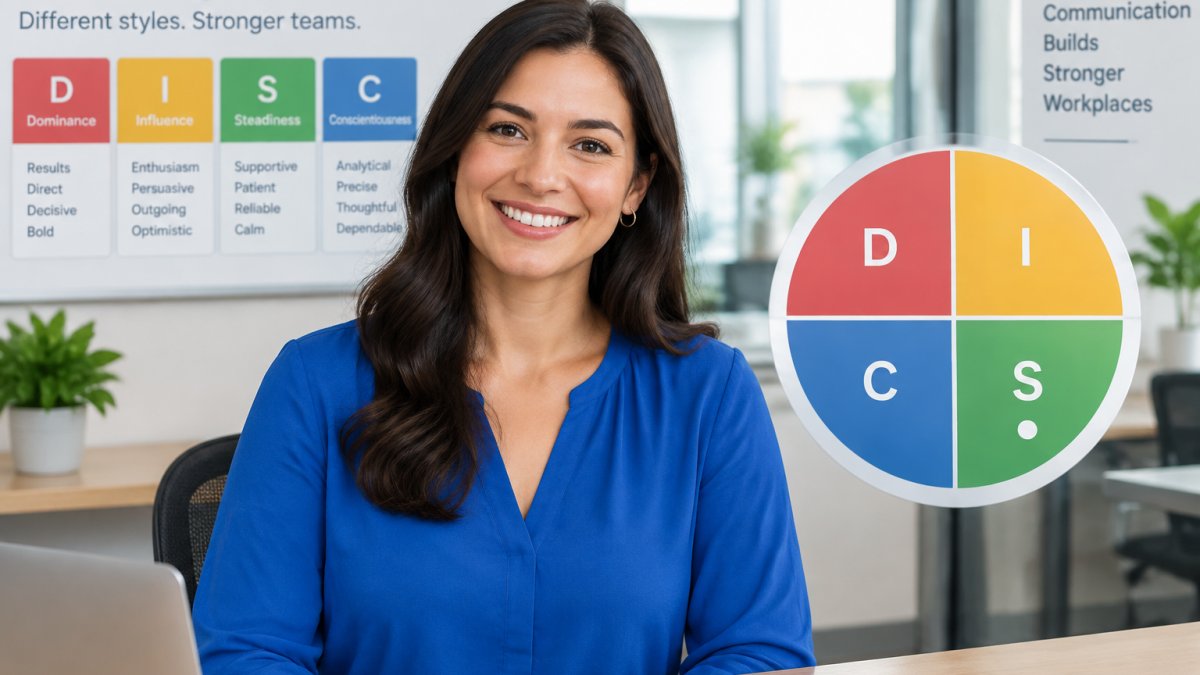
The DiSC model maps four communication styles: Dominance, Influence, Steadiness, and Conscientiousness. Each style describes how a person tends to speak, decide, and handle pressure.
- D (Dominance): direct, fast, results-first.
- I (Influence): expressive, enthusiastic, people-first.
- S (Steadiness): patient, supportive, harmony-first.
- C (Conscientiousness): precise, analytical, accuracy-first.
No style is better than another. Each brings a strength the others lack. The goal is to adapt your communication, not to change anyone’s personality.
Characteristics of the Steadiness Style at Work
Steadiness style employees are the glue of most teams. They show up consistently, listen carefully, and keep relationships steady when pressure rises.
You’ll notice these traits:
- Patience under deadlines and pressure
- Consistency in routines and follow-through
- Loyalty to teammates and the mission
- Active listening that makes others feel heard
- Empathy in tense moments
The research backs the value of this. According to HR.com’s 2026 State of Workplace Culture and Connection report, 71% of employees agree they belong at their workplace, and steady, supportive colleagues are a big reason why.
A common mistake is mistaking their calm for disengagement. It usually isn’t. They are processing, and they will speak when they feel safe.
Guiding S Style Employees Through Change and Urgency
Change is where S style employees need the most care. They thrive on stability, so sudden shifts can feel like a threat rather than an opportunity. The good news is that Steadiness personalities adapt beautifully when the change is framed with context, pacing, and a clear sense of what stays the same.
The Three-Phase Change Conversation
S style teammates often do well when change arrives in deliberate phases rather than one announcement.
- Pre-announce (a heads-up). Tell them a change is being explored before it is final. This gives the Steadiness preference time to process and ask questions privately.
- Explain (the reason and the map). Share what is changing, why it matters, and what is staying the same. The “what stays the same” line is the one S style employees remember most.
- Walk it through (the steps). Break the change into small, dated phases so it feels manageable rather than overwhelming.
Scripts for Sharing Change
|
Situation |
Instead of saying |
Try saying |
|---|---|---|
|
Early heads-up |
“We’re reorganizing next month.” |
“I wanted to give you a heads-up that we’re exploring a shift. Nothing is final yet, and I’ll walk you through it before anything changes.” |
|
Explaining the reason |
“Leadership decided.” |
“Here’s the reason behind this: it protects the consistency our team depends on. Here’s what stays the same, and here’s what shifts.” |
|
Rolling out steps |
“Just adapt as we go.” |
“We’ll do this in three phases. Phase one starts Monday and only touches X. I’ll check in each week so you always know what’s next.” |
Handling Urgency Without Creating Panic
Urgent requests are the hardest moment for a Steadiness communicator, because urgency removes the thinking time they rely on. Keep the tone calm, name the deadline plainly, and separate the urgent item from everything else.
- Name the real deadline. Say “this needs to go out by 4pm today” rather than “ASAP,” which reads as open-ended pressure.
- Shrink the ask. Ask for the one piece you need now, not the whole project.
- Offer support. “What would help you get this done today?” turns urgency into teamwork.
- Protect the routine. Keep the standing check-in even during a crunch so the week still has an anchor.
Watch out: if you announce a change and then go quiet, S style employees will fill the silence with worst-case assumptions, follow every announcement with a dated next touchpoint.
Preserving Stability During Busy Seasons
When real urgency hits, be honest but calm. Say what is needed and why, then offer support. Managers who adapt their approach by profile, as outlined in our guide on adapting management styles for different DISC profiles, can build stronger working relationships. A short weekly touchpoint, a written summary of what changed, and a clear owner for each step give Steadiness personalities the predictability they need to stay steady themselves.
Remote and Asynchronous Communication With S Style Team Members
Remote work can leave S style teammates feeling cut off. They value face-to-face connection, yet digital channels now dominate the workday. The data shows the tension clearly. According to Zoom’s 2026 workplace communication statistics, 64% of employees prefer instant messaging and 63% rely on email, while 54% still value in-person communication.
For Steadiness personalities, the challenge is not the channel, it is the missing context. A terse chat message strips away tone, and a silent thread can feel like distance. The fix is to build context and connection into every channel on purpose.
A Channel-by-Channel Playbook
|
Channel |
What S style teammates need |
How to deliver it |
|---|---|---|
|
Chat |
Warmth and completeness |
Open with a greeting, state the ask in full sentences, and avoid one-word replies that read as cold. |
|
|
Context and a clear next step |
Lead with the reason, put the ask in one line, and name who owns the next action. |
|
Video calls |
Predictability |
Share the agenda in advance, turn cameras on for one-on-ones, and leave room for questions. |
|
Written updates |
Continuity |
Send a short weekly summary of what changed, what stayed the same, and what is next. |
Preserving Context in Async Work
Written messages can carry extra weight for S style employees, who often take time to process them. Give them the full picture:
- Write complete messages. Replace “can you look at this?” with the goal, the deadline, and the support available.
- Thread the history. Link back to the earlier decision so the conversation has a trail.
- Name the owner. State clearly who is doing what so no one is left guessing.
- Invite input explicitly. “I’d value your read on this by Thursday” gives a quiet teammate a clear opening.
Inviting Input From Quieter Teammates
S style teammates share more when asked directly and given time. In remote settings, that means offering a written way to contribute before or after a live call, and following up one-on-one rather than only in the group thread. A short prompt like “What’s one thing that would make this easier for you?” often unlocks the input a group chat never surfaces.
Measuring Whether Remote Communication Is Working
Watch for practical signals: whether S style teammates respond within their usual rhythm, whether they raise questions before deadlines, whether ownership is clear in threads, and whether they follow through without reminders. If participation drops or messages get shorter, that is a cue to add context and a live check-in.
For a deeper playbook, see our articles on improving remote team communication using DiSC and using DiSC profiles for remote team communication.
Using a Communication Styles in the Workplace Quiz to Build Team Trust
A communication styles in the workplace quiz gives teams shared language fast. Instead of guessing why a coworker seems quiet, people learn to read the pattern.
The payoff is measurable. Only 24% of employees feel psychologically safe at work, according to Achievers Workforce Institute’s 2026 engagement report. Trust is scarce, and shared insight helps rebuild it.
Keep these guardrails in mind:
- Use results to adapt, not to label. A style is a starting point.
- Avoid stereotyping. No two S styles are identical.
- Focus on behavior. Talk about actions, not fixed traits.
- Revisit results over time. People grow and shift.
That last point matters. A contrarian view shared in workplace forums is that universal communication standards can feel inauthentic. We agree that authenticity matters, which is why DiSC works best as a lens for understanding, not a script.
Take the Official DiSC Assessment to Support Your S Style Team
Understanding S style employees starts with accurate insight, and that begins with a trusted assessment. Your Lifes Path provides official Everything DiSC® assessments built to do exactly that.
Our platform gives you:
- Official Everything DiSC® profiles for workplace, management, sales, and leadership
- Certified partner support to guide your rollout
- Free EPIC Sub-Account setup for easy administration
- Catalyst platform access for flexible facilitation
Teams that measure their communication, rather than assume it, can see where to focus. Start with the DiSC Workplace Profile and build from there.
Communication breakdowns cost real money and real trust. Your Lifes Path helps you fix both with official Everything DiSC® assessments, certified partner support, and free EPIC Sub-Account setup. Get started with Your Lifes Path and give every S style employee a voice your team can actually hear.
Frequently Asked Questions
How do S style employees prefer to communicate at work?
S style employees prefer calm, consistent communication that leaves room for listening. They respond best to face-to-face or video conversations where they can read tone and body language, and they appreciate advance notice before meetings or changes. Written follow-ups help them process decisions at their own pace. Keep messages warm, specific, and free of pressure, and give them time to reflect before asking for a commitment.
How can managers give feedback to an S style team member?
Start with genuine appreciation, then describe the specific behavior and its impact in plain language. S style employees take criticism personally, so separate the behavior from the person and avoid public correction. Ask for their view before offering solutions, and agree on one small next step. Follow up privately within a week to show the feedback was about support, not judgment.
What communication approaches help S style employees feel heard?
Active listening does more for S style employees than any script. Paraphrase what they said, pause before responding, and ask what support would help. Protect their time by avoiding surprise deadlines, and acknowledge their contributions in team meetings. When you need a decision, explain the reasoning and give them a day to think it over rather than pressing for an instant answer.
How can a communication styles in the workplace quiz improve team communication?
A workplace communication styles quiz gives every team member a shared language for how they prefer to give and receive information. When results are discussed openly, colleagues can adapt their approach instead of guessing. Use the quiz as a starting point for team agreements about meetings, feedback, and messaging channels, then revisit those agreements quarterly so the insights stay useful.
