

Table of Contents
- Why Organizations Are Moving Beyond Traditional Leadership Development Programs
- Executive Coaching and 1:1 Development as Primary Alternatives
- On-the-Job Leadership Development Examples and Action Learning
- Peer-to-Peer Learning and Social Learning Networks
- Best Practices for Behavioral Leadership Training With DISC Assessments
- Integrating DISC Into Mentorship Programs for Sustainable Growth
- Measuring ROI and Behavioral Change in Non-Traditional Development
- Conclusion
Last Updated: August 10, 2026
Why Organizations Are Moving Beyond Traditional Leadership Development Programs
Traditional classroom-based leadership training has dominated corporate development for decades, yet executives often return to the office only to see insights fade within weeks. Organizations are discovering that one-size-fits-all seminars don’t account for how people actually learn, how behavioral change happens, or how individual working styles shape what resonates.
The shift toward leadership development alternatives reflects a fundamental recognition: lasting growth requires personalization, real-time application, and alignment with how each leader’s behavioral style operates. According to research on modern learning approaches from the Society for Human Resource Management, organizations investing in personalized, on-the-job development report stronger retention of skills and measurable performance improvements compared to traditional off-site programs.
At Your Lifes Path, we’ve observed that the most successful leadership development strategies integrate behavioral insights, particularly DISC assessments, with practical, continuous learning models. This combination moves development from an annual event to an embedded practice within the flow of work.
Executive Coaching and 1:1 Development as Primary Alternatives
One-on-one executive coaching has emerged as one of the most effective leadership development alternatives. Unlike group training, coaching addresses the specific challenges a leader faces in their actual role, with a coach who understands their behavioral style, communication preferences, and organizational context.
Executive coaching works because it’s responsive and tailored. When coaches understand DISC behavioral styles, they can adapt their approach: a high-D leader responds to direct accountability and measurable outcomes, while a high-S leader values stability and team harmony. This behavioral alignment accelerates progress because the coaching method matches how the individual processes feedback and builds new habits.
The coaching relationship also creates psychological safety. Leaders can discuss challenges and uncertainties with a confidential partner without organizational consequences, enabling deeper behavioral change than group settings allow. Real-time problem-solving is another advantage: a leader faces a difficult conversation with a direct report, discusses it with their coach, and adjusts their approach immediately.
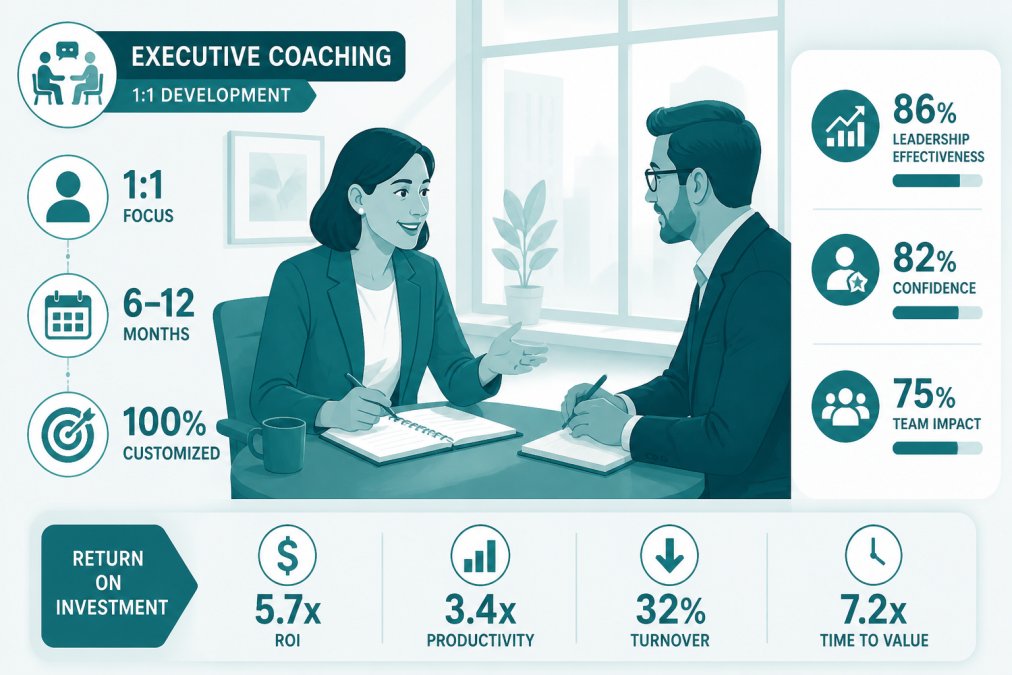
Virtual coaching platforms eliminate geographic constraints while maintaining personalized attention. For organizations with distributed teams, this scalability makes coaching accessible across regions. Coaching becomes most powerful when paired with DISC assessments, as coaches use behavioral profiles to understand each leader’s natural style and development edges, creating a shared language for growth.
On-the-Job Leadership Development Examples and Action Learning
Action learning embeds development directly into real business challenges. Rather than learning leadership theory and hoping it applies to work, leaders tackle actual organizational problems while developing skills in real time. A leader might facilitate a cross-functional team solving a supply chain inefficiency, learning delegation, conflict resolution, and strategic thinking through the experience itself.
This approach works because the stakes are genuine and feedback is immediate. A leader who struggles with delegation learns quickly when their team’s productivity depends on their ability to trust and help others. The learning sticks because it’s tied to outcomes the leader cares about.
Action learning also honors different behavioral styles. A high-D leader thrives when given autonomy to drive results on a challenging initiative. A high-I leader grows through roles requiring stakeholder influence and team motivation. A high-S leader develops by managing continuity during organizational change. A high-C leader strengthens by ensuring quality and process integrity on complex projects. When organizations design action learning opportunities that match behavioral strengths while stretching development edges, engagement and retention improve significantly.
On-the-job development examples include leading a new product launch, managing a restructuring, mentoring a struggling team member, or overseeing a technology implementation. Measurement is straightforward: did the initiative succeed? Did the leader demonstrate growth in specific competencies? Did team members report improved leadership?
Peer-to-Peer Learning and Social Learning Networks
Peer-to-peer learning leverages the collective experience within an organization. Leaders learn from peers facing similar challenges, share approaches that work, and build stronger relationships across the organization. This creates psychological safety because peers understand the organizational context in ways external trainers cannot.
Social learning networks, whether formal peer groups, communities of practice, or informal mentoring circles, provide ongoing development at lower cost than external coaching or training programs. A group of sales leaders might meet monthly to discuss customer situations and share strategies. A cohort of emerging managers might work through leadership scenarios as a group, learning from each other’s perspectives.
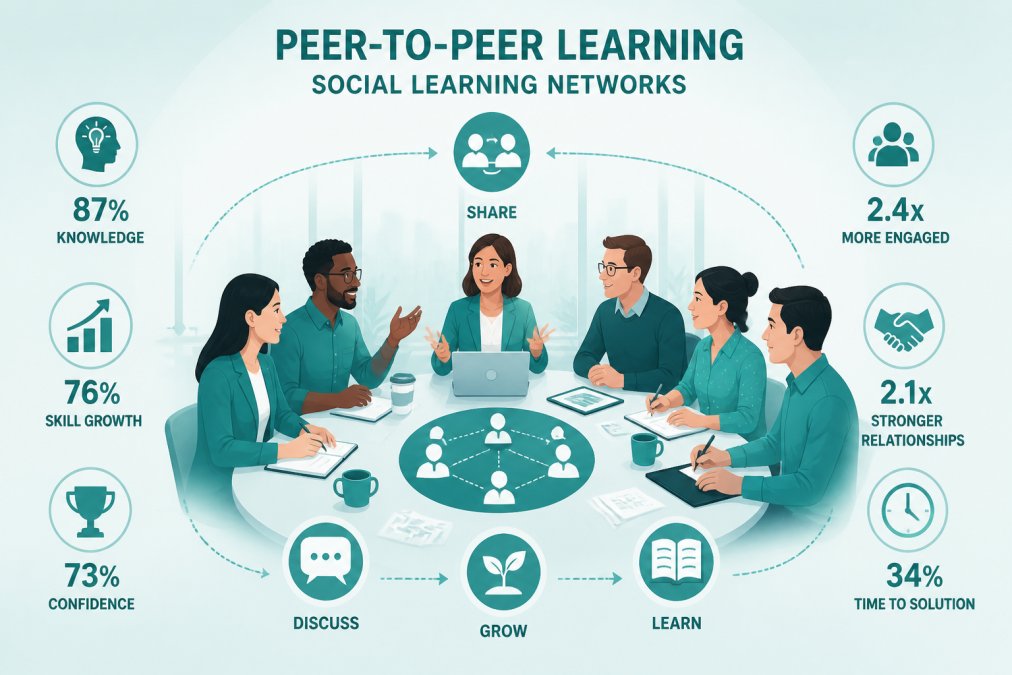
The effectiveness of peer learning increases when the group has psychological safety, shared confidentiality, genuine listening, and non-judgment. DISC awareness strengthens peer groups by helping members understand why colleagues approach problems differently. A high-D peer might prioritize speed and results, while a high-C peer emphasizes accuracy and risk mitigation. When these differences are understood as behavioral style rather than personality conflict, the group becomes more collaborative and learns from diverse perspectives.
Peer learning also builds organizational culture. Leaders who learn together develop stronger networks, share common language and values, and create informal channels for ongoing support. A skilled facilitator creates structure, ensures psychological safety, keeps conversations focused, and helps the group extract learning from experiences.
Best Practices for Behavioral Leadership Training With DISC Assessments
Behavioral leadership training that incorporates DISC assessments produces stronger outcomes than generic leadership programs because it acknowledges that people lead differently. A leader with a high-D style leads through direct communication and decisive action. A high-I leader motivates through enthusiasm and relationship-building. A high-S leader creates stability through consistency and support. A high-C leader ensures quality through process and analysis. None of these approaches is wrong; they’re different expressions of leadership strength.
Effective behavioral training teaches leaders to recognize their natural style, understand how others perceive it, and develop flexibility to adapt when situations demand it. A high-D leader learns that their directness, while efficient, can feel harsh to high-S team members who value harmony. A high-I leader discovers that their optimism, while energizing, can lack the detail high-C employees need. This awareness creates empathy and intentional adaptation.
Take The Official DiSC® Assessment Online Now! →
Best practices include:
- Administering DISC assessments before training so leaders understand their behavioral profile
- Using real organizational examples and scenarios in training
- Teaching leaders to recognize the DISC styles of their team members and adjust communication accordingly
- Creating action plans tied to specific behavioral goals
- Following up with reinforcement, as one training session creates awareness, not sustained change
- Building peer accountability groups where leaders support each other in practicing new behaviors
Your Lifes Path offers specialized DISC profiles designed for leadership development, including the DiSC Management Profile and DiSC Work of Leaders Profile. These tools provide detailed insights into how behavioral style shapes leadership effectiveness, communication impact, and team dynamics. When combined with facilitated training and ongoing reinforcement, DISC-based development produces measurable shifts in how leaders interact with their teams.
Integrating DISC Into Mentorship Programs for Sustainable Growth
Mentorship creates sustained behavioral change because it combines relationship, continuity, and accountability over time. A mentor provides guidance, models desired behaviors, opens doors to opportunities, and holds the mentee accountable for growth. Unlike a single training event, mentorship is an ongoing partnership.
DISC integration strengthens mentorship by creating explicit conversations about behavioral style and how it shapes leadership effectiveness. A mentor and mentee might discuss how the mentee’s natural style serves them well in some situations and creates friction in others. A high-I mentor working with a high-C mentee might help the mentee understand that their detail-orientation is a strength in quality-critical roles, but that speed and decisiveness matter in fast-moving situations.
Sponsorship is related to but distinct from mentorship. A sponsor actively advocates for a mentee’s advancement, opening doors and creating visibility with senior leaders. Sponsorship accelerates development because it provides real opportunities to lead larger initiatives and build credibility with decision-makers.
Organizations implementing mentorship programs should:
- Match mentors and mentees thoughtfully, considering both behavioral compatibility and intentional stretch
- Provide mentors with training on how to use DISC frameworks in conversations
- Set clear expectations about frequency, duration, and focus areas
- Create accountability for both mentor and mentee
- Measure outcomes: did the mentee develop targeted capabilities? Did they advance?
Mentorship programs that incorporate DISC are particularly effective in organizations where formal training budgets are limited. The investment is primarily in time rather than external programs, making it accessible to organizations of all sizes.
Measuring ROI and Behavioral Change in Non-Traditional Development
Non-traditional development requires thoughtful measurement because outcomes are behavioral change and business impact, not training completion. Measuring behavioral change involves 360-degree feedback before and after development, manager observations of specific behavioral shifts, team engagement and retention metrics, project outcomes, and peer feedback from learning groups or coaching relationships.
Business impact measurement includes revenue or productivity improvements in the leader’s area of responsibility, retention rates for the leader’s team, promotion rates, organizational culture metrics, and time to proficiency for new leaders.
DISC assessments provide a baseline for behavioral measurement. A leader’s profile at the start of development can be compared to their profile six or twelve months later to show shifts in how they’re perceived. While core DISC style is relatively stable, how someone expresses their style, flexibility, range, and intentionality, can change significantly with development.
Organizations serious about measuring development ROI should define specific behavioral outcomes tied to business priorities before development begins, collect baseline data on current performance, measure at regular intervals, compare developed leaders to similar peers who didn’t receive development, and calculate financial impact when possible.
Modern leadership development succeeds when it moves away from one-time events toward continuous, personalized growth aligned with how people actually work. Executive coaching, action learning, peer networks, behavioral training with DISC frameworks, and mentorship all work because they honor individual differences, provide real-time feedback, and connect development to meaningful outcomes.
Your Lifes Path DISC assessments provide the behavioral foundation that makes each of these approaches more effective. When leaders understand their natural style and how it’s perceived, when teams share a common language for behavioral differences, and when development is tied to specific DISC insights, change happens faster and sticks longer. Start by assessing your leadership team with official Everything DiSC® profiles, then build your development strategy around the behavioral insights that emerge. The result is a leadership development program tailored to how your people actually learn and grow.
Frequently Asked Questions
What makes leadership development alternatives more effective than traditional classroom training?
Modern leadership development alternatives focus on continuous, real-time support and behavioral change rather than one-time events. Action learning, executive coaching, and peer-to-peer development create immediate application opportunities. When paired with DISC assessments, these approaches help leaders understand their behavioral style and adapt their communication in the moment, driving measurable outcomes that stick long after training ends.
How do you integrate DISC into mentorship programs for better results?
Start by having mentors and mentees complete DISC assessments to understand each other's behavioral styles. This reveals communication preferences, decision-making approaches, and potential friction points. Mentors can then tailor guidance based on the mentee's style, providing detailed analysis for C-style thinkers, collaborative discussion for I-style communicators, steady support for S-style developers, and results-focused feedback for D-style leaders. This personalized approach accelerates trust and behavioral growth.
What are some on-the-job leadership development examples that work at scale?
Real-world examples include stretch assignments where leaders tackle unfamiliar challenges with coaching support, peer coaching circles where managers share solutions to current problems, reverse mentoring between senior and junior leaders, and action learning projects tied to business outcomes. These methods embed development into the flow of work rather than pulling people away. Adding DISC insights helps teams navigate these experiences with greater self-awareness and interpersonal effectiveness.
How do you measure ROI on non-traditional leadership development programs?
Track behavioral shifts using 360-degree feedback before and after development, monitor business metrics like retention, promotion rates, and team engagement scores, and measure leadership pipeline strength. Document how leaders apply new behavioral awareness, such as D-style leaders becoming more collaborative or I-style leaders improving follow-through. Connect these changes to organizational outcomes: improved team communication, faster decision-making, or reduced turnover. This data-driven approach justifies continued investment in alternative development methods.
This article was written using GrandRanker