Last Updated: November 1, 2026
Quick Summary
Effective virtual team collaboration starts with mapping each teammate’s DISC style so you can match communication, channels, and meetings to how people actually work. Set written norms by style, choose tools that serve all four styles, and build trust through small style-aware moments.
- D styles want the bottom line first, while C styles want detail and accuracy.
- Match the channel to the style: quick decisions suit chat, complex analysis suits documents.
- A collaboration plan template has five parts, including a style map and channel rules.
- Send the meeting agenda in advance and invite voices by name so S styles are heard.
- Revisit your collaboration plan each quarter to keep habits from fading.
Table of Contents
- Why DISC Makes Virtual Team Collaboration Work
- Virtual Team Collaboration Best Practices That Stick
- Choosing Virtual Team Communication Tools That Fit Every Style
- Building a Virtual Team Collaboration Plan Template
- Virtual Team Building Activities That Include Everyone
- Leading Virtual Meetings for D, I, S, and C Personalities
- Building Trust Across DISC Styles in a Remote Team
- Start Your DISC Assessment with Your Life’s Path
- Frequently Asked Questions
Why DISC Makes Virtual Team Collaboration Work
Virtual team collaboration gets easier when you stop treating every teammate the same. That is the core idea behind DISC, a behavioral framework that sorts communication preferences into four styles: Dominance, Influence, Steadiness, and Conscientiousness. Teams that map those styles before the first video call often find collaboration becomes far more natural.
Why does this matter now? Because remote work strips away the casual cues that used to smooth over differences. A 2020 literature review on virtual team challenges found that distance amplifies coordination and communication barriers. You lose the hallway chat. You lose the raised eyebrow that tells you a colleague is confused.
DISC gives those missing cues a name.
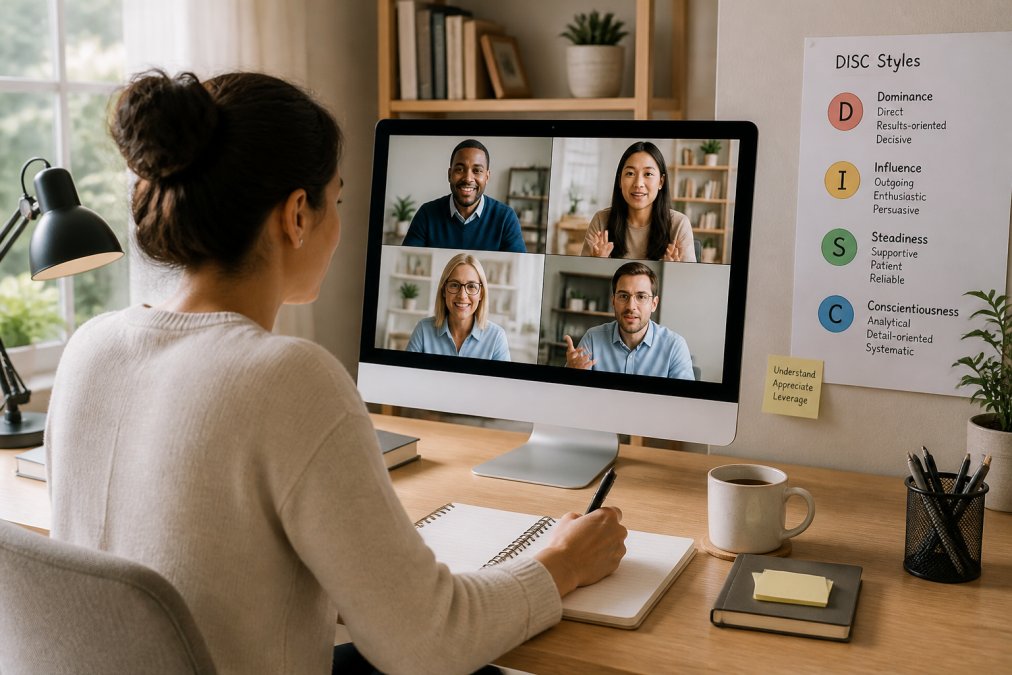
- D styles want the bottom line first.
- I styles want energy and connection.
- S styles want calm and consistency.
- C styles want detail and accuracy.
When you know which style sits behind each screen, you stop guessing. You start designing. That shift is what separates a team that merely survives remote work from one that thrives in it.
Virtual Team Collaboration Best Practices That Stick
The best practices that last are the ones tied to behavior, not tools. Many teams buy software and hope culture follows. It rarely does.
Start with three habits:
- Name the default. Every team has a communication default, usually set by whoever talks most. Point it out.
- Match the channel to the style. Quick decisions suit chat; complex analysis suits documents.
- Check in on preference, not just progress. Ask how people like to receive feedback.
A common mistake is assuming silence means agreement. For a C style, silence often means processing. For a D style, it can mean impatience. Same quiet, two very different stories.
Set Communication Norms by DISC Style
Communication norms work best when they are written down and tied to style. Here is one way to set them:
- D: Lead with the ask. Keep updates under three lines.
- I: Open with a warm line before the business.
- S: Give advance notice of change. Avoid surprise pivots.
- C: Share the source data, not just the summary.
For a deeper walkthrough of applying these insights, explore resources on using DiSC to improve remote team communication.
Choosing Virtual Team Communication Tools That Fit Every Style
Tool choice is a style question hiding in plain sight. A platform that thrills your I styles can overwhelm your C styles. A system your D styles love for speed can feel cold to your S styles.
Here is one way to match tools to styles:
|
DISC Style |
Prefers |
Tool Feature to Prioritize |
|---|---|---|
|
D |
Speed and control |
Quick-task boards, direct messaging |
|
I |
Interaction |
Video, reactions, group channels |
|
S |
Stability |
Consistent templates, saved threads |
|
C |
Accuracy |
Searchable records, file versioning |
The practical takeaway: pick tools that serve all four styles, then set norms for how each gets used. A video-first culture alienates the C who thinks best in writing. A text-only culture starves the I who needs human contact.
Balance beats novelty. Every time.
Building a Virtual Team Collaboration Plan Template
A collaboration plan template turns good intentions into repeatable habits. A useful template has five parts, and each can map to DISC.
Part 1: Style map. List each teammate’s primary style. Keep it visible.
Part 2: Channel rules. Who uses what, and when.
Part 3: Meeting rhythm. Which meetings are sync, which are async.
Part 4: Feedback format. How each style prefers to receive input.
Part 5: Review cadence. Revisit the plan each quarter.
Take The Official DiSC® Assessment Online Now! →
Here is a fill-in version you can copy:
- Team style map completed and shared
- Channel rules agreed and posted
- Async-first default set for updates
- Feedback preferences captured per person
- Quarterly review scheduled
For a step-by-step framework that builds on this, explore resources on using DiSC for effective team collaboration.
Virtual Team Building Activities That Include Everyone
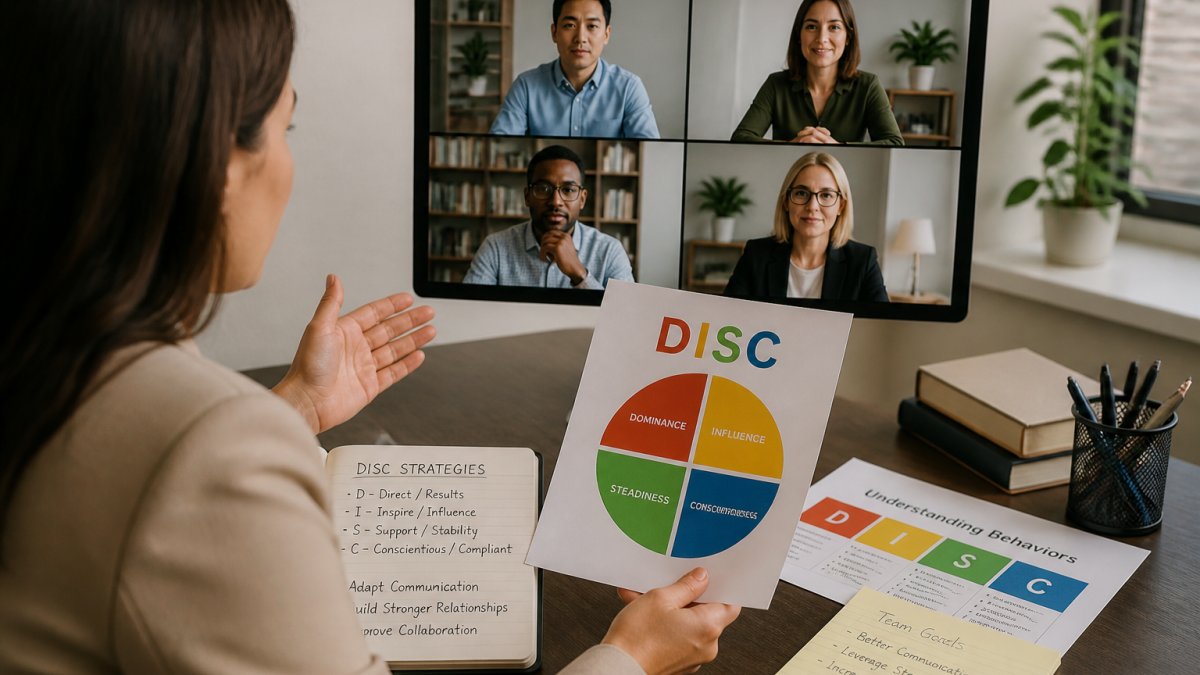
Diverse remote team laughing on a video call during a virtual team collaboration activity in a home office.
Team building falls flat when it only suits the extroverts. The fix is to design activities with all four styles in mind.
Try these:
- Two truths and a preference. Each person shares a DISC preference and why. Low pressure, high insight.
- Style-matched breakout rooms. Group similar styles to solve a puzzle, then mix them.
- Async show-and-tell. People post a photo of their workspace on their own schedule. Great for S and C styles.
- Rapid ideation rounds. Timed brainstorming suits D and I energy.
The goal is not forced fun. It is genuine connection on each person’s terms. Resources on behavioral assessments for remote team building can help you plan activities around each style. If you would rather have the session designed and facilitated for you, our Virtual Teambuilding Workshops take the guesswork out of bringing all four styles into the same room.
Leading Virtual Meetings for D, I, S, and C Personalities
Leading a virtual meeting well means reading the room you cannot see. Start with the agenda, sent in advance. That single habit serves every style.
Then run the meeting in layers:
- Open with purpose. D styles need the destination in the first minute.
- Invite voices by name. I styles jump in; S styles wait. Call on both.
- Share the data. C styles trust numbers more than enthusiasm.
- Close with clear next steps. Everyone needs the recap.
Watch out: letting the loudest style dominate. A meeting led by D energy alone can steamroll the careful thinkers. Build in a silent writing block before discussion. You will hear from people who otherwise stay quiet. Establishing these inclusive habits fosters a culture of mutual respect that serves as the foundation for modern business etiquette in the digital workplace.
Leaders who want to go deeper can explore how DiSC training supports remote leadership teams.
Building Trust Across DISC Styles in a Remote Team
Trust in a remote team is built in small, style-aware moments. A D style trusts you when you deliver on time. An I style trusts you when you engage warmly. An S style trusts you when you are predictable. A C style trusts you when your work is accurate.
So trust is not one thing. It is four things, and each teammate weighs them differently.
Three habits build it fast:
- Do what you say, visibly. Follow through in shared channels.
- Adapt your delivery, not your standards. Same reliability, different packaging.
- Name the style gap out loud. “I know you like the details up front, so here they are.”
Resources on using DiSC profiles to improve cross-functional collaboration can show how this plays out across departments.
Start Your DISC Assessment with Your Life’s Path
Here is the challenge most remote teams face: they know DISC matters, but they never put it into practice. Knowledge without a shared language fades within weeks.
Your Lifes Path offers official Everything DiSC® assessments designed for teams. Key features include:
- Certified partner support to guide your rollout
- Free EPIC Sub-Account setup to manage profiles in one place
- The Catalyst platform for flexible, ongoing facilitation
These tools turn strategies for effective virtual team collaboration into daily habits, not a one-time workshop. When your team shares a common behavioral language, every meeting, message, and check-in gets a little smoother.
Take The Official DiSC® Assessment Online Now! to give your remote team the insight it needs to communicate with confidence.
Frequently Asked Questions
How can DISC styles improve virtual team communication?
DISC styles give every team member a shared language for how they prefer to communicate. D styles want short, direct updates. I styles thrive on open video conversation. S styles need steady reassurance and clear timelines. C styles want written detail and accuracy. When your virtual team collaboration plan maps each style to a channel and format, people stop guessing and start getting messages in the form they process best. The Everything DiSC® Workplace Profile can give everyone that map.
What should a virtual team collaboration plan template include?
A strong template covers five parts: a communication charter listing channels and response times by DISC style, a meeting cadence with agendas, a decision-making process, a roles and responsibilities grid, and a check-in schedule for trust building. Add a section for virtual team building activities so connection does not get lost behind tasks. Keep the template to two pages and review it each quarter. The Everything DiSC® Workplace Profile can help each section of the plan reflect your team’s behavioral mix.
How do you build trust in a virtual team with different DISC styles?
Trust in a remote team grows when people feel understood, and DISC makes that faster. D styles build trust through follow-through on commitments. I styles need visible recognition and informal connection. S styles need consistency and patience. C styles need accuracy and clear reasoning. Schedule short one-on-one check-ins, match your communication to each person’s style, and use a shared virtual team collaboration plan so expectations are explicit. Research on global virtual teams consistently links clear expectations and purposeful meetings to stronger team effectiveness.
How can managers engage different DISC styles in virtual meetings?
Send the agenda in advance so C and S styles can prepare, open with a quick round so I styles get airtime, keep decisions crisp for D styles, and leave written follow-up notes for everyone. Rotate the meeting format: some sessions on video, some asynchronous. Ask each person how they prefer to contribute and record it in your virtual team collaboration plan. A manager who adapts the meeting to the styles in the room gets higher engagement than one who runs every call the same way.
