

Table of Contents
- Why Workplace Conflict Demands a DISC-Centered Approach
- Understanding the Four DISC Behavioral Styles
- How to Resolve Conflict with D-Style Personalities
- DiSC Conflict Management Styles: Strategies for I, S, and C Personalities
- The Role of Self-Awareness in Transforming Conflict
- Everything DiSC Productive Conflict Examples: Real-World Applications
- Building a Conflict-Resilient Culture with DISC Insights
- Conclusion
Last Updated: August 18, 2026
Workplace conflict is unavoidable. According to Wiley Workplace Intelligence (2025), 88% of people report difficulty engaging in workplace conflict, and 67% ruminate about it outside of work hours. What separates high-performing teams from those stuck in dysfunction is how they respond to disagreement. Using DISC personality profiles for conflict resolution transforms conflict from a source of frustration into an opportunity for deeper understanding and stronger relationships.
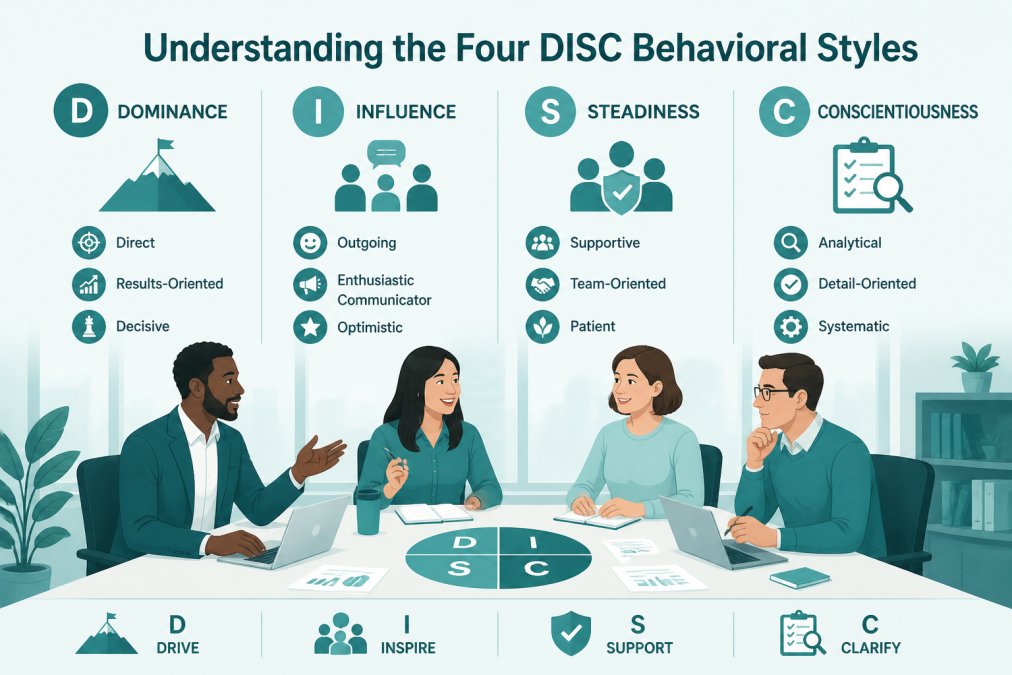
Your Life’s Path has helped organizations address this challenge by connecting DISC behavioral insights with practical conflict management strategies. Rather than treating conflict as a problem to avoid, DISC-centered approaches reframe differences as natural expressions of how people think, communicate, and work. When teams understand the four behavioral styles, Dominance, Influence, Steadiness, and Conscientiousness, they gain a shared language for navigating disagreement with intention and respect.
This guide walks you through how to use DISC personality profiles to resolve workplace conflict effectively, whether you’re managing a direct report, mediating between team members, or building a culture where productive conflict strengthens relationships.
Why Workplace Conflict Demands a DISC-Centered Approach
Workplace conflict costs U.S. businesses a staggering $359 billion in lost productivity each year, according to the Everything DiSC Productive Conflict assessment (2025). Most organizations treat conflict as a failure and invest in avoidance strategies. The data tells a different story. According to research from the Center for Creative Leadership (2024), teams with better interpersonal understanding perform significantly better. When people understand why their colleagues approach problems differently, they stop taking disagreement personally.
This is where DISC becomes invaluable. Rather than relying on generic conflict resolution advice that assumes everyone communicates the same way, DISC-centric approaches honor how different behavioral styles naturally approach disagreement. A D-style person wants to cut through emotion and reach a decision fast. An I-style person wants to feel heard and maintain the relationship. An S-style person needs stability and time to process. A C-style person wants data and accuracy before committing. None of these approaches is wrong; they’re just different.
When conflict arises without this framework, misunderstanding compounds quickly. With DISC, the same disagreement becomes an opportunity: "I see you’re moving quickly toward a solution. I need more time to think this through. Can we schedule a follow-up meeting?" Conflict becomes dialogue.
Conflict resolution isn’t about eliminating disagreement, it’s about understanding how different behavioral styles naturally approach conflict and adapting your communication to bridge those differences.
Understanding the Four DISC Behavioral Styles
Before you can resolve conflict effectively, you need to recognize how each DISC style experiences and responds to disagreement.
D-Style: Dominance and Direct Results
D-styles are driven by results. They value efficiency, control, and moving toward solutions quickly. In conflict, they tend to be direct, competitive, and focused on winning the argument or reaching a decision. Their directness can feel harsh to people with other styles. S-styles may perceive it as dismissive. I-styles may feel personally rejected. C-styles may see it as reckless decision-making without proper analysis.
I-Style: Influence and People Connection
I-styles are motivated by relationships and recognition. They’re optimistic, enthusiastic, and genuinely concerned about how others feel. In conflict, I-styles want to preserve the relationship above all else. Their focus on harmony can delay necessary decisions. D-styles perceive this as indecisiveness. C-styles may see it as avoiding the facts.
S-Style: Steadiness and Stability
S-styles value loyalty, stability, and maintaining the status quo. They’re patient, supportive, and deeply uncomfortable with conflict. In disagreement, S-styles tend to withdraw, hoping the conflict will resolve itself. They need time to process change and want reassurance that the relationship is still solid. Their avoidance can allow problems to fester.
C-Style: Conscientiousness and Accuracy
C-styles are driven by accuracy, quality, and doing things right. They want data, logic, and a clear process before making decisions. In conflict, C-styles focus on facts and procedures rather than emotions. Their focus on accuracy can feel like criticism to people with other styles. D-styles become frustrated with the pace of analysis. I-styles may feel the C-style is dismissing their emotional perspective.
How to Resolve Conflict with D-Style Personalities
D-styles want respect, autonomy, and results. When resolving conflict with a D-style person, give them those things.
Get to the point. D-styles don’t want lengthy preambles. State the issue clearly: "I noticed we disagreed on the project timeline in yesterday’s meeting. I want to understand your perspective and find a path forward."
Focus on outcomes. Frame the conversation around what you’re trying to accomplish. "The goal is to deliver this project on time without burning out the team. How do you see us balancing speed and sustainability?"
Propose solutions, not problems. Come prepared with 2-3 potential solutions and ask which approach they prefer.
Stand your ground respectfully. D-styles respect people who advocate for their position without backing down from emotion. "I understand your approach. I see it differently because of X. Here’s why I think my approach works better."
Set clear expectations. After resolving the conflict, state explicitly what happens next. "We’ve agreed to X. I’ll handle Y by Friday. You’ll handle Z by next Wednesday. We’ll check in on Tuesday."
When working with D-style personalities in conflict, remember they’re not trying to hurt you, they’re trying to win. Channel that competitive energy toward solving the problem together rather than against each other.
DiSC Conflict Management Styles: Strategies for I, S, and C Personalities
While D-styles demand directness and speed, the other three styles require different approaches.
Managing Conflict with I-Style Team Members
I-styles fear rejection and disconnection. When resolving conflict with an I-style person, prioritize the relationship and their feelings.
Acknowledge emotions first. Before diving into facts, validate what the I-style person is feeling. "I can see this situation is really frustrating for you, and I appreciate you bringing it up."
Create a safe space for dialogue. I-styles communicate best in one-on-one conversations. Schedule a private meeting and let them know this is about working through something together.
Connect to shared goals. Frame the resolution around maintaining the relationship and helping the team. "I want us to work well together. What would help you feel more supported on this project?"
Be warm and collaborative. Use language that emphasizes partnership: "Let’s figure this out together" rather than "Here’s what we need to do."
Follow up on the relationship. After resolving the conflict, check in on how the I-style person is doing.
Managing Conflict with S-Style Team Members
S-styles fear change and instability. When resolving conflict with an S-style person, provide reassurance and move slowly.
Give them time to process. Don’t expect S-styles to engage immediately. "I’d like to talk about what happened. Would tomorrow afternoon work for you?"
Reassure them about the relationship. Start by confirming that the relationship is solid. "I value working with you. This disagreement doesn’t change that. I want to understand your perspective."
Listen more than you talk. Ask questions and wait for their response. Give them space to think without filling silences.
Take The Official DiSC® Assessment Online Now! →
Avoid sudden changes. When resolving the conflict, explain how the resolution will work and what stays the same. "We’re going to handle this differently going forward, but your role on the team isn’t changing." strategies for family conflict.
Follow a clear process. Outline the steps: "First, we’ll talk through what happened. Then we’ll agree on how to move forward. Then we’ll check in next week."
Managing Conflict with C-Style Team Members
C-styles fear making mistakes and being seen as careless. When resolving conflict with a C-style person, provide data and a logical framework.
Bring evidence. C-styles want facts, not opinions. "I looked at the project timeline. Here’s what I found…"
Acknowledge their perspective. If they’ve identified a real issue, say so. "You’re correct about the process gap. I appreciate you pointing it out."
Propose a systematic solution. "Here’s the root cause. Here’s my proposed fix. Here’s why I think it will work."
Ask for their input. "What am I overlooking here? What would you do differently?"
Document the agreement. After resolving the conflict, summarize what you’ve agreed to in writing. C-styles want a clear record of decisions and next steps.
The biggest mistake when managing conflict with C-styles is dismissing their concerns as perfectionism. Their attention to detail often prevents real problems. Take their input seriously, even if their pace feels slow.
The Role of Self-Awareness in Transforming Conflict
Self-awareness is the foundation of effective conflict resolution. When you understand your own DISC style, you recognize your natural conflict patterns, what triggers you, and where you’re likely to misunderstand people with different styles.
A D-style person who understands their own style recognizes that their directness can feel harsh and can choose to slow down and explain their thinking. An I-style person recognizes that their focus on harmony can delay necessary decisions and can practice being honest even when it’s uncomfortable. An S-style person recognizes that their avoidance can allow problems to grow and can push themselves to engage. A C-style person recognizes that their focus on accuracy can feel like endless criticism and can learn to say, "This is good enough."
According to research from the Center for Creative Leadership (2024), there is a clear link between heightened self-awareness and enhanced leadership competencies. This applies directly to conflict resolution. Leaders who understand their own DISC style navigate disagreement more skillfully because they’re less reactive and more intentional.
Self-awareness also helps you recognize when you’re in a conflict pattern and pause to respond differently. This transforms conflict from something that happens to you into something you can actively shape.
Everything DiSC Productive Conflict Examples: Real-World Applications
Theory becomes powerful when you see it in action. A manufacturing company had persistent conflict between the plant manager (D-style) and the quality assurance lead (C-style). The manager wanted to increase production speed; the QA lead insisted on longer testing protocols. Using DISC assessments, they recognized their different priorities. The manager learned that the QA lead’s caution wasn’t obstruction; it was conscientiousness. The QA lead learned that the manager’s push for speed wasn’t recklessness; it was results-orientation. They redesigned the process to include faster testing methods that still met quality standards.
Approximately 41% of HR professionals use DISC for onboarding because it is straightforward, rapid to complete, and highly actionable, according to the DISC Assessment vs Other Communication Style Tools Comparison (2026).

Building a Conflict-Resilient Culture with DISC Insights
Individual conflict resolution is important, but the real transformation happens at the organizational level. Teams that reference DISC regularly in hiring, onboarding, project planning, and conflict resolution maintain the cultural shift.
Make DISC part of onboarding. When new team members arrive, have them complete a DISC assessment and share their profile with the team. This signals that understanding behavioral styles is a core part of how you work together.
Use DISC language in daily interactions. When someone takes a different approach, frame it through DISC: "That’s very D-style, you’re moving fast toward a solution. I’m more C-style, I need to think through the details."
Address conflict through a DISC lens. When conflicts arise, use DISC insights to understand what’s happening. "This disagreement happened because we have different styles. Let’s use that understanding to find a solution that works for both of us."
Celebrate style diversity. Highlight examples where different styles contributed to success. "The D-style pushed us to make a decision. The C-style made sure we had the right data. The I-style kept us connected as a team. The S-style made sure everyone was comfortable with the change."
Invest in ongoing development. Your Life’s Path offers Virtual Teambuilding Workshops and DiSC Certification programs designed to build this capability across your organization.
When DISC becomes part of your culture, conflict stops being something people dread and starts being something they navigate skillfully.
[Building a conflict-resilient culture](/blog/corporate-culture-improvement-strategies-disc-guide/) requires making DISC a daily practice, not a one-time training. When teams consistently reference behavioral styles, they develop a shared language that transforms how they handle disagreement.
Conclusion
Workplace conflict is inevitable. How you respond to it determines whether it damages relationships or strengthens them. Using DISC personality profiles for conflict resolution gives you a framework for understanding why people approach disagreement differently and how to bridge those differences.
When your team understands the four DISC styles, Dominance, Influence, Steadiness, and Conscientiousness, they stop taking conflict personally. They recognize that a D-style person’s directness isn’t coldness; it’s results-orientation. An I-style person’s focus on feelings isn’t weakness; it’s relationship awareness. An S-style person’s caution isn’t obstruction; it’s stability-seeking. A C-style person’s analysis isn’t perfectionism; it’s quality-assurance.
Your Life’s Path provides the official Everything DiSC® assessments and certified partner support to help your organization build this capability. With tools like the DiSC Workplace Profile and access to EPIC Sub-Accounts, you can assess your team, facilitate workshops, and create the shared language that transforms how your organization handles conflict. Start building your conflict-resilient culture today with Your Life’s Path.
Frequently Asked Questions
How does DiSC help in resolving workplace conflict?
DISC personality profiles create a shared language that helps team members understand why they approach situations differently. By recognizing behavioral styles, individuals respond more constructively and minimize miscommunication. Research shows that when DISC is used alongside emotional intelligence training, teams see marked improvement in communication and conflict resolution skills. Understanding these differences transforms conflict from a source of frustration into an opportunity for deeper collaboration.
What are the four DiSC personality styles in conflict?
The D-style (Dominance) prioritizes quick decisions and direct communication; the I-style (Influence) values relationship-building and collaboration; the S-style (Steadiness) seeks stability and consensus; and the C-style (Conscientiousness) focuses on accuracy and proper process. Each style has distinct conflict triggers and resolution preferences. A D-style may escalate tension by pushing for immediate action, while an S-style may withdraw to preserve harmony. Recognizing these patterns allows managers and team members to adapt their approach and find common ground.
Why is understanding behavioral styles important for conflict resolution?
Behavioral differences are the root of 88% of workplace conflict engagement challenges. When people don't understand why colleagues communicate or prioritize differently, misunderstandings multiply. DISC assessments provide a framework to reframe differences as strengths rather than obstacles. Teams with better interpersonal understanding perform significantly better, according to Harvard Business Review research. By identifying each person's natural style, organizations reduce friction, improve trust, and create an environment where diverse perspectives strengthen outcomes instead of creating division.
How can managers use DiSC to mediate team disagreements?
Managers can use DISC profiles to identify the root of disagreements and coach each party toward their preferred communication style. For example, if a D-style and S-style are in conflict, the manager can help the D-style slow down and acknowledge the S-style's need for stability, while coaching the S-style to express concerns more directly. Real case studies show that a single mediation meeting where both employees reviewed collaborative DISC reports and set communication ground rules resolved much of their conflict. Managers equipped with DISC insights become better coaches and can guide teams toward productive dialogue faster.
This article was written using GrandRanker